

Wine has always been a tradition in the Mediterranean, and has been since time immemorial. The Mediterranean wine culture has also given rise to tales about the benefits of drinking wine. The secret of the world-famous French paradox lies in red wine and its rich polyphenol content. However, in Mediterranean countries, apart from its health benefits, wine is consumed primarily for pleasure and to enhance the taste sensation of food. In this article, we will review some of the basics that are good to know when pairing wine with food.
When choosing a wine, it is important that the flavours of the food and the wine complement each other, so if the wine and food are well matched, the flavours of both will stand out. There are two main principles used to match food and wine: seeking similar aromas and flavours or contrasting them. In doing so, certain traditions have developed that have endured for centuries.
In the following, we will review the simplest basics of wine and food pairing, based on the overall flavour characteristics of the food being served.
- One of the most common principles is to pair a strong full-bodied wine with a heavy meal and a light wine with a light meal, i.e. the food and wine should be “of the same weight”. In this way, the resulting palate is similar and the flavours combine naturally. Also, a slightly sweet wine is always easier to pair with food, as the residual sugar in the wine diminishes the flavours of the wine and enhances the flavours of the dish.
- Salty foods can be successfully soothed by light, acidic wines and young red wines with high tannin content (or bitter-tasting tannins). The latter go particularly well with salty cheeses. Adding salt to a wine is also a good way of enhancing the overall flavour profile if you know that the wine you are giving as a gift is powerful and robust rather than light and airy.
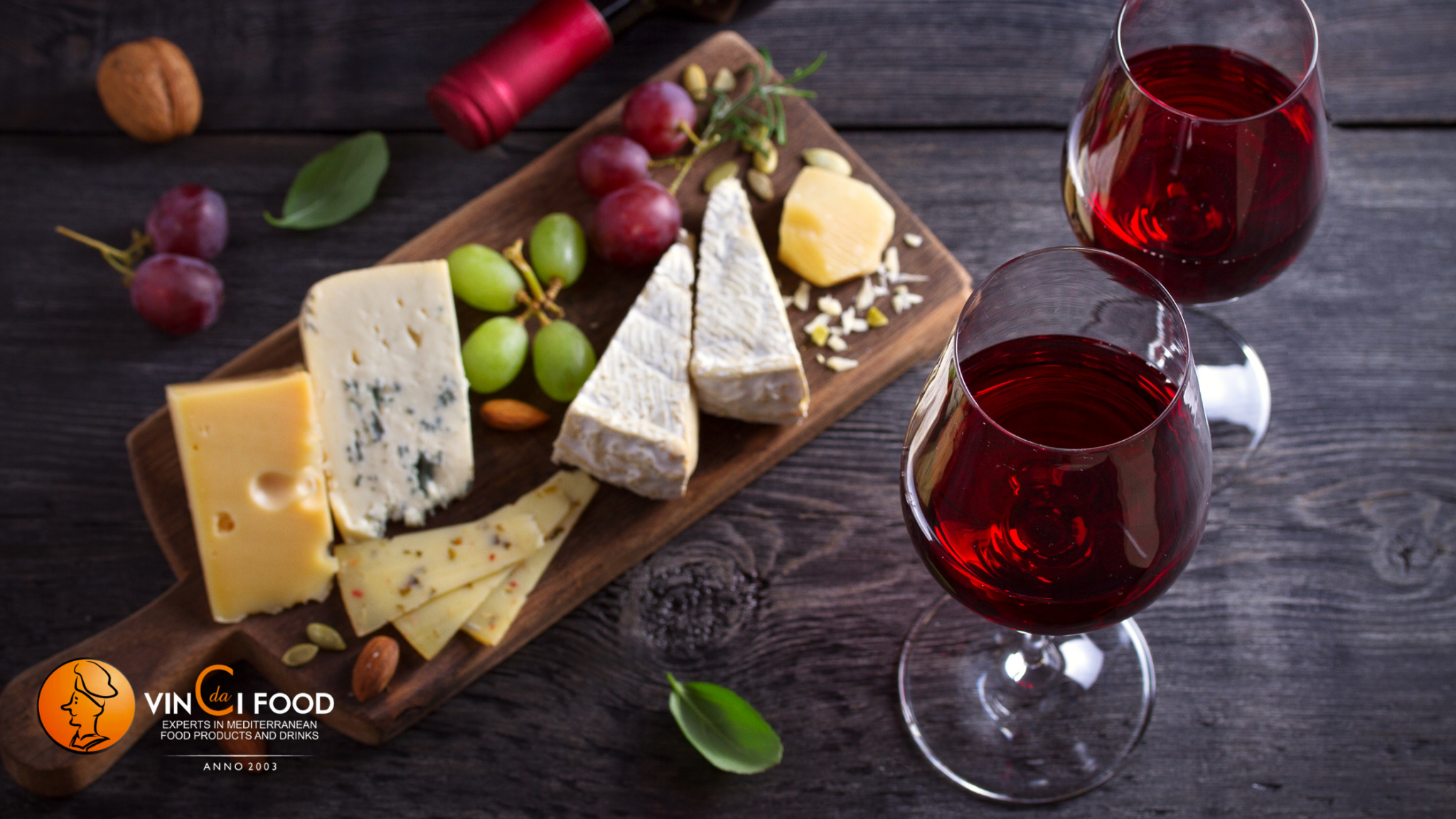
- Another option is to use the principle of contrast for savoury foods. The best example is salty blue cheese, where the sweet taste of the dessert wine nicely balances the saltiness of the mould cheese.
- When using foods with a bitter taste (radish, broccoli, artichokes, green peppers, citrus fruits, smoked and live-grilled products, dark chocolate, etc.), avoid wine with a high bitterness content, which would exacerbate it. A slightly more acidic wine is well suited to soften and balance the bitter taste.
- Sour does not make sour sourer, so sour wine goes with sour food. In particular, the acidic flavour or component in a dish softens the flavour of the wine, making it seem fruitier and rounder. At the same time, the high acidity of the wine is now important so that the wine does not become flat with the dish. For example, raspberry desserts or pastries seem sweet but are quite strong in acidity. Now, if the acidity of the wine did not balance this out, the overall taste would become limp.
- Juicy semi-dry and fruity wines, with less acidity and bitterness, go well with spicy foods. The spicier the food, the lower the acidity of the wine, otherwise the food will seem hot and spicy. Similarly, a sweeter wine will help to soften the spiciness of the food.
- It is also a good idea to keep an eye on the alcohol content of the wine or to dilute it deliberately. In fact, the alcohol in the wine enhances the heat of the dish, while the juiciness of the wine helps to neutralise the heat.
- Desserts, as well as other foods containing sweet ingredients (honey, jelly, jelly), significantly reduce the sweetness of the wine, so the wine served with these foods should be sweet and fruity. Dessert wines are often served alongside desserts, while a classic choice for chocolate desserts is, for example, port.
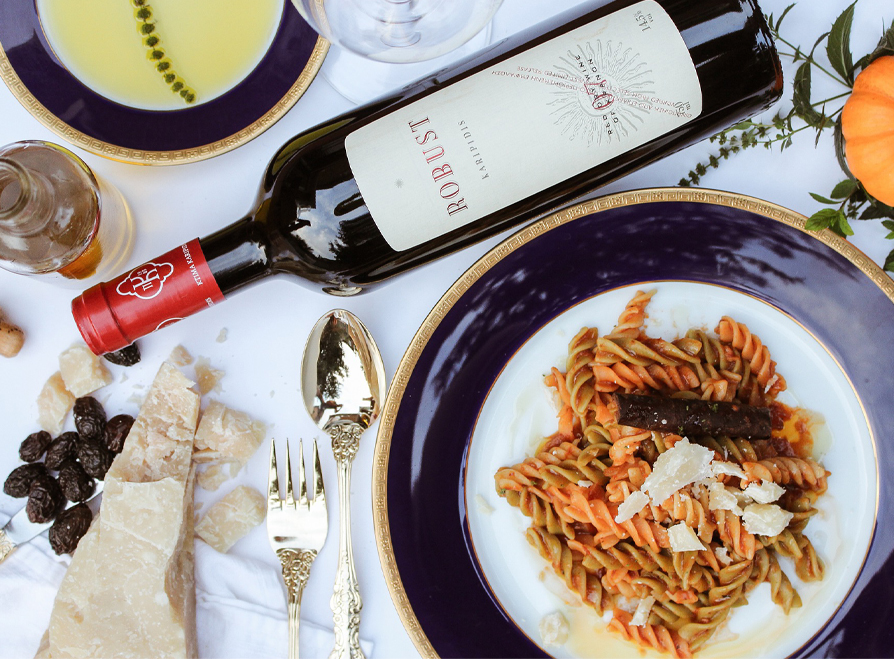
- For fatty foods, acidic wines speed up the digestion of dietary fats. For example, it’s worth drinking an acidic white wine with a hearty pasta dish. The acid in the wine helps to destroy the fat in the cream sauce. Likewise, sweet and sour wines can be served with rich desserts.
- It’s good to know that temperature also plays an important role in food and wine pairing. For example, wine should always be served chilled with cold food – otherwise it will mask the flavour and taste of the food. In this case, a fuller-bodied wine served with cold food should also be chilled beforehand.
As with alcohol in general, moderation is important when drinking wine. To ensure that drinking wine does us good rather than harm, it is good practice to drink no more than 1-2 glasses of wine a day for women and 2-3 glasses for men. Alongside wine, it is a good idea to keep a large jug of water on the dinner table to make the evening more enjoyable and to avoid the possible dehydration that can accompany alcohol consumption (in the Mediterranean, too, it was the diluted form of wine that was preferred – in Greece it was common to dilute wine to a ratio of 3 parts water to 1 part wine).
Now that the basics are clear, all you need to do is invite your friends over for a Mediterranean dinner and enjoy a glass or two of good wine together!
For great tips on how to make a Mediterranean-style antipasto, risotto, pasta or pizza, check out this Da Vinci page!