

Hands up who thinks pizza is the most perfect food in the world! You’re not alone. Homemade Italian pizza is especially delicious.
Although the first pizzas were made in the hot ovens of 10th century Italy in Naples, this savoury pie topped with a crispy yeast dough crust and melted cheese has become one of the world’s most loved foods! Although pizza is best known as a popular take-away fast food, we believe that anyone can try their hand at making an authentic Italian pizza at home. Below, we’ll take a look at 7 tips to make a homemade Italian pizza a success.

1. Season the pizza dough with plenty of salt!
Without a sufficient amount of salt, flour has little flavour. However, as pizza dough is made up of a large proportion of flour, it is the duty of a good pizza chef to season the dough sufficiently. Often, however, home cooks are rather modest when it comes to seasoning the dough, considering the dough less important than the pizza dough. However, the dough needs attention alongside the other components of the pizza. Here, however, there is an important additional rule. If the toppings of the pizza you are making already contain foods with a high salt content – anchovies, olives, Parmesan or cured Italian meats (salami, prosciutto, pancetta, etc.) – you can be more conservative when adding salt to the dough.
2. Don’t use a rolling pin to roll the dough!
Professional pizza masters in pizza oven moulds are able to fly it high into the air, providing spectators with a culinary-sporting spectacle of their own. Fortunately, throwing dough into the air is not a compulsory skill when making pizza. The most important thing to keep in mind when shaping dough is that you don’t use a rolling pin. This is because rolling the dough breaks up the small air bubbles it contains, which in turn makes the dough too dense. Instead, use your hands to shape the dough by gently stretching the dough with your fingertips until you achieve the desired size of pizza base. It doesn’t matter that you achieve a perfectly round dough ring as a result of your handiwork. Your pizza base can be oval instead. Or square. You decide!
NOTE: If the pizza base seems too difficult to work with (e.g. the dough pulls back too much when stretched), it is often because the dough is overworked or too cold. If this is the case, let the dough stand at room temperature for 15 minutes. This will help the gluten in the dough to settle and the dough to warm up. Then try again.
3. Make your own tomato sauce!
If you’ve already started making dough, it would be a good idea to continue in that vein and make your own pizza sauce. In fact, making the sauce for a homemade Italian pizza is easier than making the dough, and there’s no doubt that homemade is tastier. To make a simple homemade pizza sauce, all you need is a can of crushed tomatoes with garlic, basil, salt and pepper. You can go even further and make the sauce in a blender by pureeing the tomatoes, garlic and (fresh) basil. (You could also try adding anchovies to the pizza sauce if you like). As well as homemade sauce, home cooking also gives you the chance to use your favourite cheese in the pizza topping. We also recommend taking full advantage of this privilege when making pizza at home.
4. Less is better!
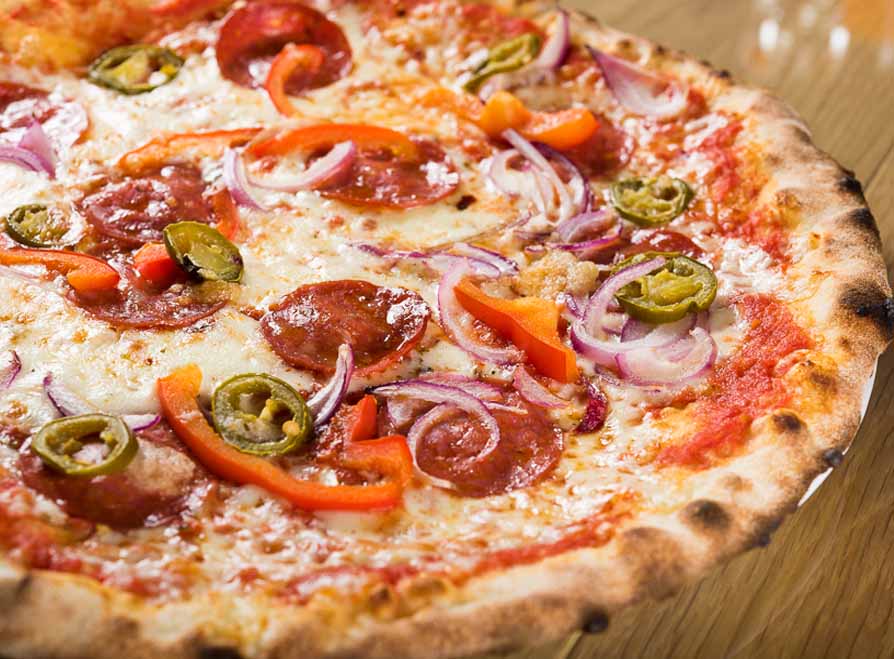
For the best pizza experience, don’t pile up too many ingredients at once. We suggest you don’t turn your pizza into a meat-lover’s dream by using 10 different types of sausage and ham. First of all, pizzas with such rich toppings need a very strong dough base and a very, very hot pizza oven. Secondly, the charm of classic pizzas lies in their simplicity! Choose a couple of complementary ingredients that go well together and make even a crispy pizza base shine.
Often, all you need for a really tasty pizza is a good quality Italian ham or sausage, in addition to tomato sauce and cheese. Of course, Margherita’s pizza, made with just a simple tomato sauce, mozzarella cheese and fresh basil, is also a timeless classic. Besides the above, the most common pizza toppings are Prosciutto-rocket, Prosciutto-champignons, anchovies-caper-olives or simply combinations of different vegetables (grilled peppers, aubergines and courgettes, artichoke hearts, spinach, etc.). The choice is yours!
NOTE! Don’t overdo it with the cheese when topping the pizza! Too much cheese will make the pizza too oily and difficult to handle when melted!
5. Do not use baking paper!
For the more dedicated home pizza chef, you can even buy a pizza stone in the shops, specially designed for crispy crust pizzas. However, this investment isn’t strictly necessary, as you can get a nice result with a plain baking tray and a drizzle of cooking oil. Like the pizza stone, the baking tray can be preheated for better results and oiled before use. Adding the oil to the baking tray helps to ‘fry’ the pizza base and achieve that crispy, slightly burnt crust familiar to all pizza lovers.
As for the baking paper, experienced pizza masters recommend leaving it in the kitchen when making pizza. In fact, when baking a pizza, it is important that the dough is in direct contact with the heat source, which in this case is the oven plate. The baking paper would be an undesirable barrier between the dough and the baking tray, preventing the heat from spreading and the pizza crust from crisping.
6. Weigh the pre-cooking of the pizza base!
Depending on the type of pizza you plan to make, you may need to pre-cook the pizza base. This may be necessary if the pizza crust contains high moisture or wet ingredients, such as fresh mozzarella or some (canned) vegetables. In this case, the excess moisture in the pizza topping can make the dough base soggy. Pre-cooking the pizza base ensures that the base cooks through with the toppings and achieves the expected crispiness despite the excess moisture. However, for those who love extra-crispy crusts, we recommend pre-cooking the crust every time you make a pizza.
NOTE: When pre-cooking the crust, check the level of doneness of the crust not by the edges but by the centre, using tongs or a pan spatula to help you lift the crust.
7. Cook the pizza at a high temperature!
People are often afraid to use high temperatures for cooking. However, this rule does not apply to pizzas made in the hotter Italian wood-fired ovens, which means that the pizza needs to be cooked at a proper temperature. It’s worth turning the oven knob up to 250 degrees Celsius. At the same time, the chef shouldn’t move too far away from the oven, but keep a close eye on the cooking pie. Experienced pizza masters recommend a simple logic when judging pizza readiness: when the cheese is melted and the base is golden, the pizza is ready. Some people also follow a sort of just-in-case rule when cooking a pizza, which recommends leaving it in the oven for 5 minutes longer than you initially think is necessary.
NOTE: After coming out of the oven, drizzle a little olive oil over the finished pizza. This will dot the “i”.
Da Vinci wishes you all floury hands and exciting pizza tastings! Bon appetit!
All the ingredients you need to make a mouth-watering Da Vinci homemade Italian pizza in your own oven can be found in one kit in our online shop: “For the pizza maker“. You will have enough ingredients to make at least 6 pizzas.