

Caesar salad – arguably one of the most famous salads in the world, with a following in every corner of the globe. If you’d like to know how to make a perfect Caesar salad yourself to treat your family and friends to, read on! In this article, we take a look at the history of the salad and how to make a classic Caesar salad at home. For the best end result, we’ll also share tips on how to avoid common mistakes when making this salad.
The honour of being the first to prepare the salad goes to Caesar Cardini, the restaurant owner. Caesar was an Italian immigrant who owned restaurants in both Mexico and the USA. But the restaurant owner’s invention of the famous salad came about by chance. The Fourth of July celebrations in 1924 had depleted the restaurant’s food stocks, and Caesar was forced to improvise dishes from the ingredients that were left in the kitchen.
Standing in the restaurant hall, right next to the guests’ table, he mixed a salad from the ingredients in the kitchen, under their watchful eyes, which later became known as Caesar salad. This novel salad consisted of romaine lettuce leaves, croutons, Grana Padano D.O.P cheese, a semi-raw egg, garlic, olive oil, lemon juice and Worcestershire sauce. Caesar seasoned the finished salad with fresh pepper.
It’s interesting to note that Cardini did not use anchovies in the original Caesar salad and never actually added them to his salad recipe. However, anchovies became an integral part of Caesar salad as interpreted by other chefs, and today many salad gourmets cannot imagine Caesar salad without anchovies.
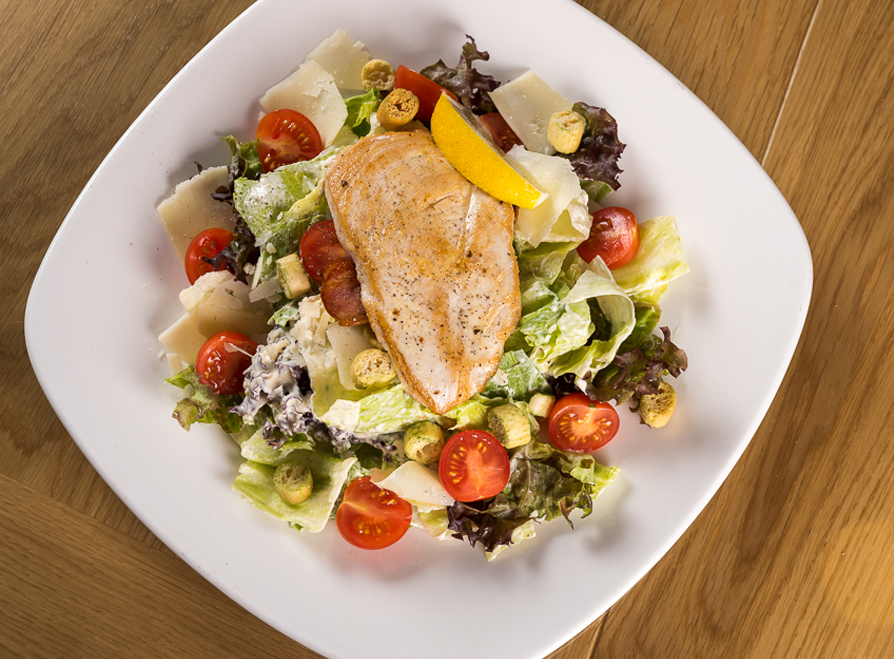
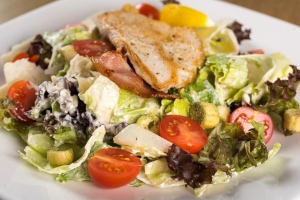 Nowadays, Caesar salad has many different variations and can be enjoyed in different forms as a starter or main course. The most popular accompaniments to Caesar salad today are. cherry tomatoes, capers, grilled chicken fillet, salmon or trout fillet, beef fillet, shrimps or pieces of bacon. Romaine lettuce can also often be substituted with other lettuce leaves, and other cheeses (e.g. Romano) can be used instead of Grana Padano D.O.P. cheese.
Here we take a closer look at the classic components of Caesar salad and the salad-making process itself. The integral ingredients of a classic Caesar salad are:
-
Caesar sauce. Chop and mix together the anchovy fillets, garlic and a pinch of salt. Use the side of a knife blade to press the mixture into a smooth paste, then scrape into a large bowl. Add the egg yolks and lemon juice (Worcestershire sauce and mustard if you like), beat well. Add a drizzle of olive oil to the sauce mixture, beating the mixture until thick and glossy. Add the finely grated Grana Padano D.O.P. cheese. Season the sauce with freshly ground pepper and add more lemon juice if desired.
-
Sip! You can also press the garlic into the sauce mixture to distribute the garlic flavour more evenly. When it comes to oils, if possible, choose a good quality extra virgin olive oil, which gives Caesar sauce its classic flavour and does not overpower the other ingredients. If olive oil is not available, you can also use rapeseed oil in the salad dressing.
-
-
Roman salad. At the heart of every Caesar salad is a sturdy, crisp-textured romaine lettuce that can carry the weight of the dressing and other components much better than many other salads. To prepare the salad, tear the leaves into smaller pieces.
-
Sip! The original recipe for Caesar salad actually used whole Roman lettuce leaves, eaten with your fingers. The same technique can be used today to serve the salad in a more modern way. It is also recommended to refrigerate the romaine lettuce for at least 1 hour before cooking, to give it the crispiest texture possible.
-
-
Croutons. In addition to the romaine lettuce and Caesar dressing, the third vital component of Caesar salad is the croutons. They add flavour, aroma and a crunchy texture to the salad, and also infuse the croutons with a little salad dressing, harmonising the distribution of flavours in the salad. Unflavoured croutons are often used in Caesar salad, but they can also be flavoured with garlic.
-
Sip! For the best results, make your own croutons. It’s better to tear the pastry rather than cut it – this way the croutons will have a nicer texture in the salad and will “catch” the dressing better. However, it’s important to toast the croutons in the oven until they are crispy enough to eat, otherwise they can turn soggy inside the salad too quickly.
-
-
Grana Padano D.O.P cheese. Grana Padano D.O.P. cheese is the only cheese used in the Caesar salad. In fact, Grana Padano D.O.P. cheese has all the necessary flavour and saltiness to complement the Caesar dressing and croutons.
-
Sip! For the best flavour, use fresh and high quality Grana Padano D.O.P. cheese, added to the salad as shredded shavings with vegetable broth.
-
Salad assembly
Mix the Caesar salad ingredients together in a large mixing bowl before serving. This is necessary to ensure that all the salad ingredients are evenly coated with the dressing. It also gives the salad a finishing touch. To serve, add a few more Grana Padano D.O.P. chips. If you wish, you can add any additional toppings you like to the Caesar salad: cherry tomatoes, grilled chicken fillets, prawns, bacon pieces, etc..
Sip! To mix the salad comfortably, it’s a good idea to choose a bowl that is large enough so that the ingredients don’t get damaged during mixing and are evenly coated with the dressing. It is best to mix the salad by hand. To do this, gently toss the romaine lettuce, Caesar dressing and croutons and finally add the Grana Padano D.O.P. cheese shavings.
Come and try our delicious Caesar salads at Da Vinci Pasta & Pizza restaurants! With us, you can choose from grilled chicken, grilled trout or tiger prawns as a salad topping.
Enjoy!